Quiet Quitting vs. Loud Recognition - And Why Well-Being Matters


VIWELL team
Last updated October 14, 2025

They say culture is what you celebrate—and what you tolerate when no one’s watching. In many organizations today, two opposing signals are quietly shaping the workplace:
- Quiet quitting: when employees mentally withdraw, do the minimum, and stop giving discretionary effort
- Loud recognition: when organizations intentionally celebrate contributions out loud, reinforcing what matters
If you’re running the VIWELL platform, you already understand that culture and well-being go hand in hand. In this article, we’ll explore how loud recognition coupled with care can help you prevent quiet quitting - and how VIWELL becomes a powerful lever in that journey.
Why Quiet Quitting Isn’t Just a Buzzword
Quiet quitting doesn’t come from bad employees. It comes from feeling invisible, undervalued, or burned out.
When leaders:
- make changes without context
- reassign roles without explanation
- rarely thank or acknowledge strong efforts
- ignore stress, balance, or wellness
then even the most loyal contributors can begin pulling back. They don’t leave visibly- they simply fade, disengage, and eventually move on quietly.
But your culture doesn’t fade without leaving traces: lower innovation, less collaboration, hidden attrition, and a morale drain many don’t see until it’s too late.
What Loud Recognition Looks Like -And Why It Works
Loud recognition isn’t about applause for its own sake. It’s purposeful, visible, and tied to values. It says:
We saw your effort. We see your impact. We want others to see it too.
This kind of recognition can be:
- A public shout-out in a town hall
- A peer message highlighting someone’s alignment with company values
- A manager celebrating not just what was achieved, but how
- Recognition of non‑work milestones (wellness wins, personal progress, balance)
When recognition is real, it becomes a leadership signal - not a perk. It sets cultural expectations about what behaviors and values we reward, and it creates momentum.
How Well Being Completes the Equation
Here’s the reality many companies overlook: you can’t sustain loud recognition if people are exhausted and depleted.
If your team is running on empty, recognition feels transactional, superficial, or—even worse - hypocritical.
True culture demands that recognition and well-being be woven together.
That’s where VIWELL becomes your strategic advantage.
Your Platform for Recognition + Well-Being
VIWELL isn’t just a wellness tracking tool. It’s a culture engine that helps organizations:
- Celebrate health milestones - things like regular sleep, mental recovery, mindfulness streaks, or fitness goals
- Spot early signals of burnout or disengagement via usage data and feedback
- Embed recognition into wellness, so performance and care don’t live in separate silos
- Support managers with insight into both productivity and well-being in their teams
Instead of treating health and workload as separate realms, VIWELL lets you bring them together—so that when someone is doing great, both their work and their wellness are seen and rewarded.
From Quiet to Loud: How to Shift Culture
You don’t need a massive overhaul. You need consistent leadership signals and habitual practices. Here’s a simple framework:
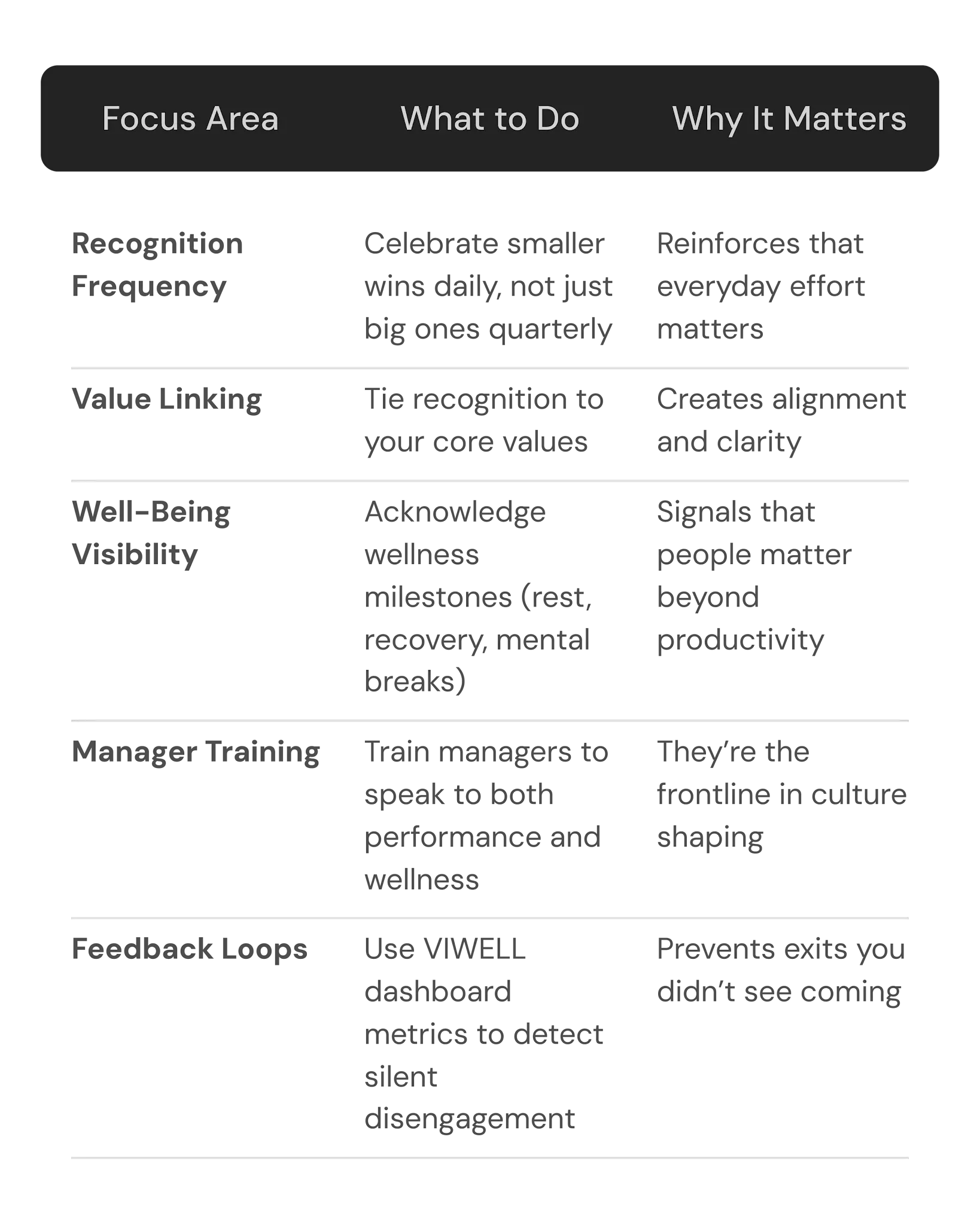
When recognition is loud and care for well-being is visible, you send a clear message: “We see you, we value you - and we want you to last here.”
Quiet Quitting Is a Signal. What Signal Do You Want to Send?
If people are clocking out emotionally, your culture is speaking. It’s saying that the work matters more than the person.
If recognition is rare and unnoticed, your culture is muted.
But when you amplify appreciation and care, you turn culture into your greatest differentiator.
That’s the promise of VIWELL: to help you make recognition and well-being inseparable parts of your culture - not afterthoughts.
It’s time to move from quiet disengagement to loud, intentional culture.