
Turning well-being into ROI: HR’s 2026 budget strategy
VIWELL team
Last updated September 18, 2025

September hits. Suddenly, HR leaders are juggling spreadsheets, budget proposals, and meetings with finance. You know the drill - it’s not just about what you want to invest in; it’s about what you can justify. And here’s the challenge: when the CFO or CEO scans your proposal, they’re not looking for good intentions. They’re asking, “What’s the return?”
That’s where most well-being initiatives hit a wall. They sound good on paper, but without a solid ROI framework, they’re vulnerable. The good news? Research shows companies with strong well-being programs can boost productivity by up to 20% - a stat that speaks directly to the bottom line. Tie well-being to retention, absenteeism, productivity, and cost savings, and it becomes clear: this isn’t just about people - it’s about performance and profit.
In this article, we’ll explore the ROI metrics executives care about most - and how tools like VIWELL’s dashboards help translate engagement into measurable business outcomes.
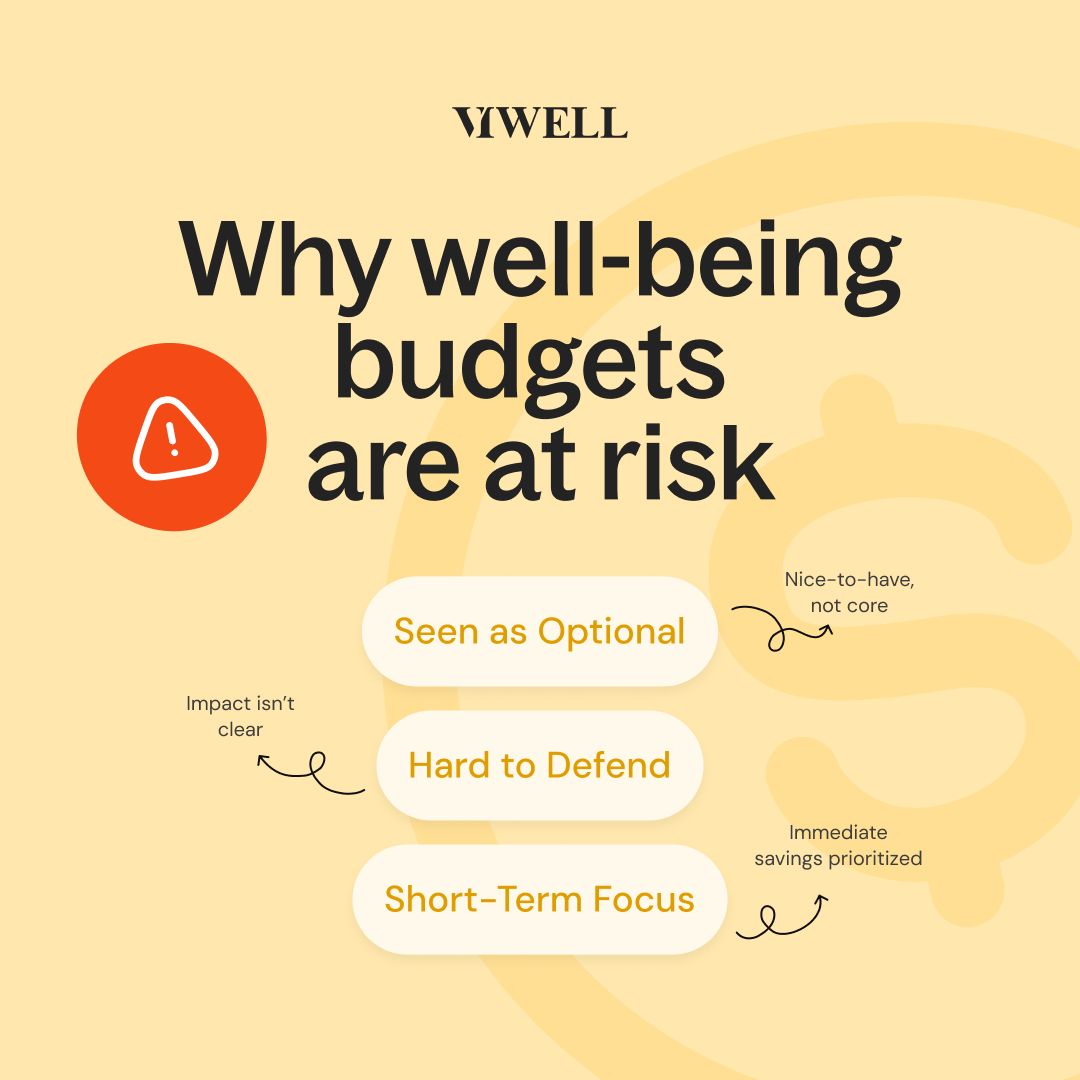
Why well-being budgets are at risk
It’s seen as discretionary: Well-being programs often fall into the "nice-to-have" category, unlike payroll, compliance, or revenue-driving functions. That makes them an easy target in cost-cutting seasons.
There’s a lack of measurable data: Without clear financial impact, it’s difficult to defend your budget in front of finance teams.
Short-term pressures dominate: Leadership tends to focus on immediate cost savings - not long-term outcomes. That puts strategic investments like well-being at risk.
The executive question: What’s the return?
In budget meetings, executives aren’t asking how employees feel - they’re asking how programs affect the bottom line. The difference between survival and cuts lies in demonstrating measurable impact.
For example, wellness programs can deliver a strong ROI: on average, companies see a $1.50 to $3 return for every $1 spent on wellness initiatives over two to nine years. By linking programs to metrics like these, HR leaders transform qualitative initiatives into strategic, ROI-driven investments.
Defending your budget: Metrics that matter
When building a business case for HR and well-being initiatives, numbers speak louder than promises. To gain executive buy-in, focus on the five metrics that leaders care about most - and frame them in a way that reflects both business impact and employee well-being.
Productivity & efficiency gains
Employees who feel supported — physically, emotionally, and mentally — are more engaged, focused, and productive. Investing in well-being translates directly into improved performance, better collaboration, and stronger business outcomes.
Employee retention & turnover
High turnover is costly. Well-being programs cultivate a sense of belonging and purpose, increasing employee satisfaction and loyalty. Retaining talent reduces the financial and cultural cost of constant hiring and onboarding.
Healthcare cost management
Preventive care is more cost-effective than crisis care. A proactive wellness strategy reduces high-cost medical events and chronic illness, helping the organization control rising healthcare expenses over time.
Engagement, satisfaction & employer brand
A thriving workplace culture not only drives employee satisfaction but also strengthens your reputation in the market. Companies known for caring about their people attract top talent and enjoy higher long-term loyalty.
Mindful presence at work
Rather than focusing on reducing absences, support employees in being fully present and mindful when they are at work. Wellness programs that address stress, mental health, and work-life balance help teams show up with energy, clarity, and purpose - contributing to a more consistent and resilient workforce.
Leveraging data to make your case
Engagement dashboards and analytics transform participation into measurable outcomes. Tracking program usage, risk assessments, and engagement trends provides HR leaders with clear, CFO-friendly evidence. Historical comparisons make the narrative more credible and show tangible impact over time.
Aligning leadership early: From perk to strategic investment
Well-being initiatives thrive when executives understand the risks of inaction. Demonstrating how wellness programs influence productivity, retention, and overall organizational performance elevates them from discretionary perks to essential strategic levers. Securing early leadership alignment ensures your programs are championed, not questioned.
The boardroom impact: Turning wellness into ROI
When HR brings clear metrics and business outcomes to the table, well-being programs shift from discretionary spend to strategic investment. Data-backed reporting and tangible business impact give HR leaders the confidence to defend budgets, secure funding, and position themselves as strategic partners driving organizational success.
