
Re-engage your team after summer using real-time insights
VIWELL team
Last updated September 17, 2025

As the out-of-office replies fade and team calendars begin to fill again, many companies face a familiar challenge: a noticeable drop in employee engagement after the summer break. This isn’t just about people getting back into routine - employee energy, participation, and focus often dip sharply in early fall, just when organizations need momentum to carry them into Q4.
And the problem runs deeper than seasonal transitions. According to Gallup, global employee engagement fell from 23% to 21% in 2024, with U.S. engagement hitting a 10-year low - the second decline in over a decade. (Gallup, 2024)
When organizations use real-time people data to monitor engagement health, they can detect early warning signs, intervene meaningfully, and reignite motivation - before costly churn or burnout sets in. Here is how to re-engage your team after summer using real-time insights.
Why employee engagement drops after summer
Employee engagement isn’t just about job satisfaction — it’s about focus, energy, and emotional connection to work. And after summer, that connection gets tested.
Disrupted routines from extended leave or looser summer schedules
Reentry stress, including ramping up toward year-end targets
Life changes, like back-to-school demands or caregiving adjustments
Cognitive overload as inboxes overflow and calendars fill
If these factors go unaddressed, they translate into disengagement, absenteeism, and decreased productivity. But with the right insights in hand, HR leaders can intervene early and effectively.
Real-time metrics to watch
Here’s what the best-in-class people teams track in September using modern HR tech:
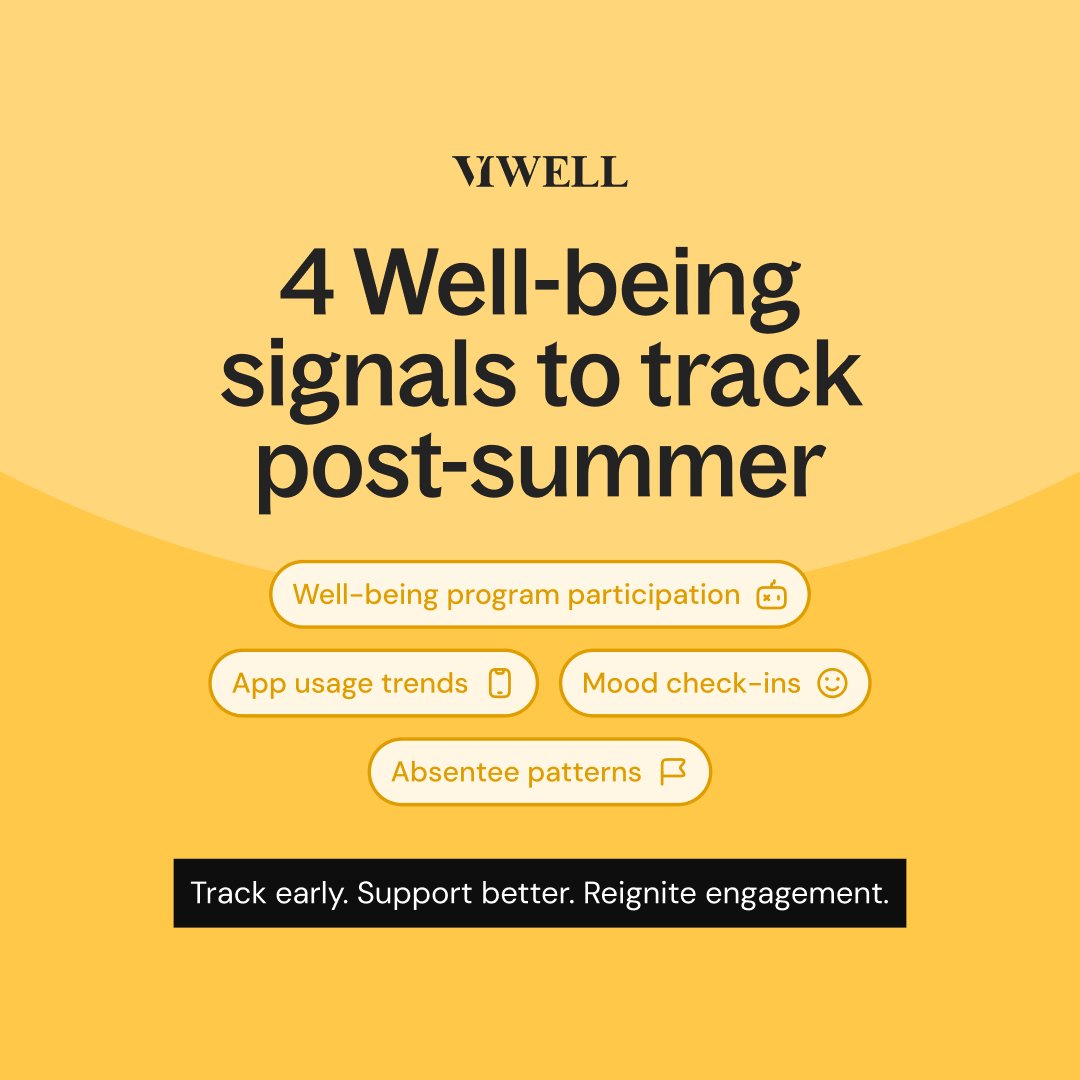
Well-being program participation
Is engagement in health, fitness, or mental wellness programs dipping? A decline here often signals emotional fatigue or declining motivation.
Employee well-being app usage
Digital health platforms like the VIWELL app offer insight into daily behavior trends — a real-time pulse on well-being, motivation, and stress levels.
Mood & sentiment scores
Use pulse surveys or AI-powered check-ins to capture changing sentiment across departments. Declining mood? It’s time to act.
Absenteeism & tardiness
Even small upticks in absenteeism or late starts can signal broader engagement issues. Look for patterns, not outliers.
By combining these metrics, HR leaders can spot disengagement before it hits performance metrics or culture.
Early signs of disengagement: Beyond the metrics
Data tells the story, but behavior confirms it. Here’s what to watch for on the ground:
Reduced contributions in team meetings or Slack threads
Declining quality of work, missed deadlines, or reduced creativity
Opt-outs from optional events, learning sessions, or recognition moments
More frequent negative feedback, complaints, or visible withdrawal
If any of these signs are surfacing in your teams, it’s time to act.
How VIWELL empowers your post-summer engagement strategy
Successful post-summer engagement requires seamless integration of data, wellbeing resources, and ongoing support. VIWELL offers a comprehensive solution with:
Workplace dashboard: Real-time tracking and analysis of engagement, productivity, and wellness KPIs for proactive decision-making.
Digital well-being app: Holistic support covering mental, physical, social, and nutritional health - all accessible to employees anytime.
Mood tracker: Daily emotional check-ins feeding into sentiment metrics, helping leaders gauge workforce mood trends.
Content library: On-demand guides, videos, and recipes perfect for sustaining engagement during quieter transition periods.
Action plan for fall employee engagement
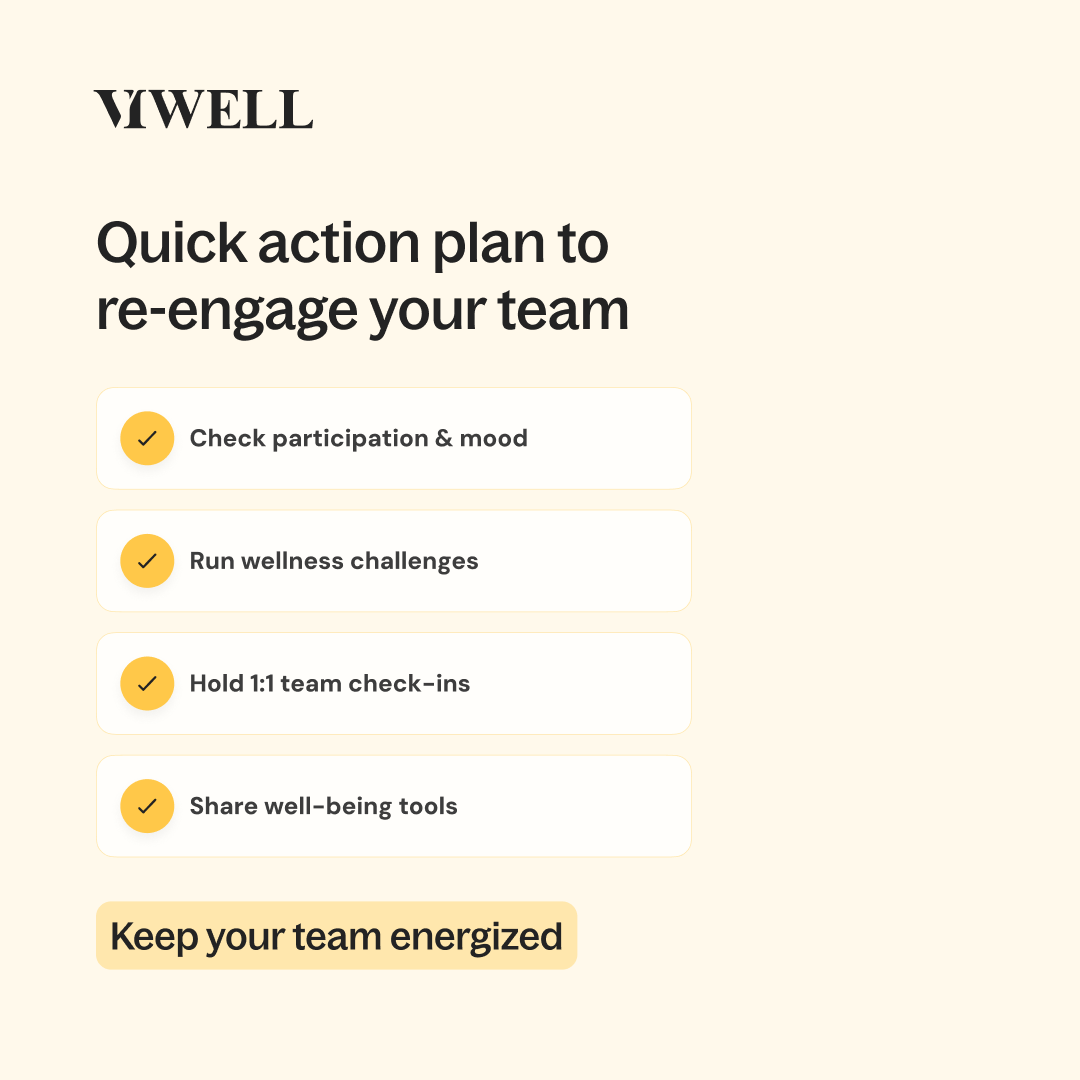
Run an engagement checkup
Regularly review participation, mood scores, app usage, and absenteeism data. Gallup research shows organizations that actively track and manage engagement experience 21% higher profitability and 41% lower absenteeism.
Launch targeted campaigns
Design and roll out wellness and mindfulness programs tailored to your team’s needs. These initiatives can include step challenges, or meditation sessions that promote healthy habits and reduce stress. Well-structured campaigns encourage friendly competition and foster a sense of community around well-being.
Schedule regular check-ins
Encourage managers to schedule recurring one-on-one meetings with their team members. These conversations should focus on understanding individual workloads, and offering personalized support. Regular check-ins build trust and help catch engagement issues before they escalate.
Leverage available resources
Make use of curated well-being content such as articles, videos, and practical guides that employees can access anytime. Pair these with tools for daily mood tracking or quick emotional check-ins to maintain a continuous dialogue about mental health. Consistent communication and resource sharing keep wellbeing top of mind and help employees feel supported.
Measure and Adapt:
Continuously analyze engagement data alongside qualitative feedback to identify what’s working and where gaps remain. Use this insight to refine programs, adjust communication strategies, and introduce new initiatives that better meet employee needs. An adaptive approach ensures your engagement efforts remain relevant and effective over time.
Boosting engagement during seasonal transitions
Use real-time insights and targeted actions to spot disengagement early and boost employee motivation. Prioritize well-being, clear communication, and regular check-ins to keep your team connected and productive. With the right approach, you can transform the post-summer slump into a strong finish for the year.
