
Wellness that works: Building engagement through recognition and rewards
VIWELL team
Last updated July 28, 2025
Table of Contents:
What is employee recognition - and why it matters in wellness programs?
What are wellness rewards and recognition programs?
The role of rewards in sustaining healthy habits
Modern wellness platforms offer features that make this seamless
Why integrating wellness, rewards & recognition matters
What a unified experience delivers?
Key elements of an effective rewards and recognition program
How to launch a successful wellness rewards program

Many organizations invest in wellness programs with the right intentions - offering resources and initiatives aimed at supporting employee health. But without consistent engagement or meaningful connection, these efforts often miss the mark.
We understand that creating a lasting impact requires more than just access. It requires action — and acknowledgment. That’s why our approach focuses on wellness that works: building engagement through recognition and rewards.
By combining personalized wellness journeys with real-time feedback and incentives, we help companies move beyond participation metrics and toward a truly embedded culture of well-being - where employees feel supported, motivated, and valued for taking care of themselves.
What is employee recognition - and why it matters in wellness programs?
Employee recognition is the act of acknowledging and appreciating an individual’s contributions, efforts, or behaviors in the workplace. While traditionally linked to performance or achievement, recognition is increasingly being applied to well-being — encouraging employees not just to work hard, but to care for their physical, mental, and emotional health.
Recognition can take many forms:
Peer-to-peer appreciation
Manager-led shoutouts
Milestone rewards for wellness achievements
In-app points, badges, or incentives tied to healthy behaviors
When integrated into wellness programs, recognition becomes more than a nice gesture — it becomes a strategic tool for building engagement through recognition and rewards. It motivates participation, reinforces positive habits, and creates a culture where well-being is visibly valued. According to Gallup, meeting just one pillar of strategic recognition can lead to a 2.9x engagement multiplier compared to meeting none. That’s the power of being seen - and celebrated.
What are wellness rewards and recognition programs?
Unlike traditional incentive programs that often focus on performance metrics or KPIs, wellness rewards and recognition programs are specifically designed to encourage employee participation in well-being initiatives. These programs tie incentives directly to activities that support physical, mental, and emotional health - turning wellness into an ongoing, integrated habit rather than a one-off event.
Whether the rewards are tangible (like gift cards or wellness products) or experiential (such as access to classes or personal coaching), they serve as meaningful acknowledgments of individual effort. More importantly, they send a clear message: that an employee’s health, happiness, and self-care are valued by the organization.
By aligning recognition with wellness goals, companies build stronger emotional connections to healthy behaviors. This might take the form of peer encouragement, team-based challenges, milestone tracking, or individual incentives - all working together to create a culture where well-being is visible and valued.
The role of rewards in sustaining healthy habits
Education and access are important, but lasting behavior change often comes down to consistent motivation. That’s where rewards make a measurable difference. When employees see their efforts being acknowledged and rewarded - not just occasionally, but as part of their wellness journey - it creates a cycle of positive reinforcement.
Modern wellness platforms offer features that make this seamless
Employees earn coins by engaging in wellness activities, completing challenges, and achieving key milestones
These coins can be redeemed instantly for meaningful rewards like gift cards or wellness products
Progress is tracked in real time, providing visual feedback and a sense of control
An intuitive admin portal allows HR to review participation data, demographic trends, and engagement patterns, helping optimize the program’s effectiveness
This type of instant, impactful recognition gives employees both immediate gratification and long-term motivation. It turns wellness into an interactive experience - one where each step forward is recognized and rewarded.
Why integrating wellness, rewards & recognition matters
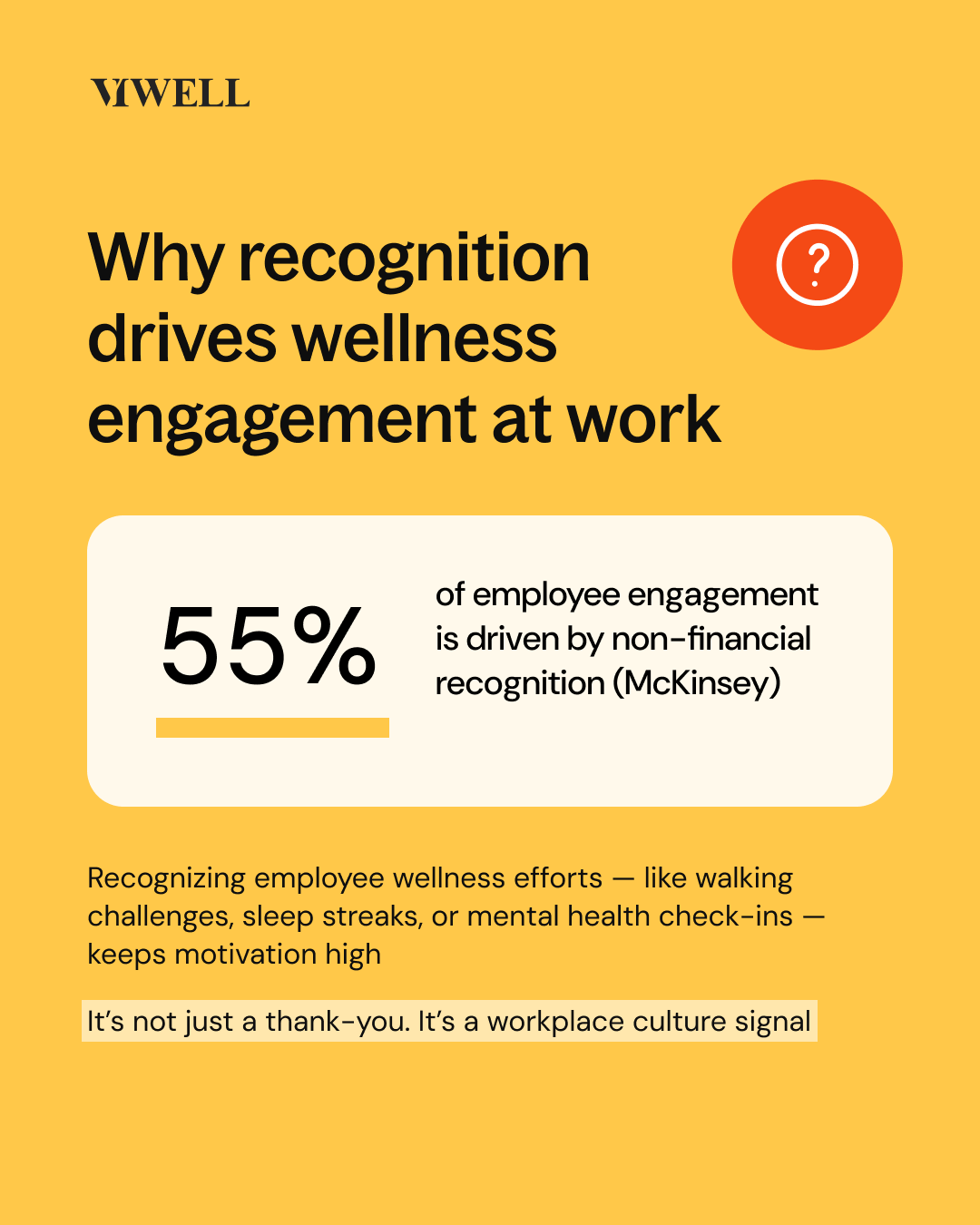
Drives motivation and lasting change
Having a wellness program is just the beginning. Real impact comes when employees feel continuously encouraged to engage. That’s where incentives - whether in the form of acknowledgment, digital coins, or redeemable rewards - help reinforce behaviors and build lasting habits. When employees regularly receive feedback and rewards for their efforts, wellness shifts from a one-time initiative to an ongoing part of everyday life.
Supports mental well-being and reduces burnout
Feeling recognized isn’t just a nice-to-have - it’s a psychological need. Employees who feel valued report lower stress, higher emotional resilience, and stronger team morale. Incorporating regular recognition into your wellness strategy helps prevent burnout by showing employees their efforts - and well-being - truly matter.
Simplifies access and prevents overload
Managing multiple wellness tools can be overwhelming. When programs are scattered, participation drops and engagement fatigue creeps in.
That’s why a unified platform is key. When employees can track their progress, join challenges, and redeem rewards all in one place, the experience is smoother, more intuitive - and more effective.
What a unified experience delivers?
One platform to manage wellness, rewards, and recognition
Less confusion, more clarity on how to get involved
Real-time visibility for both employees and HR
Stronger and more consistent engagement
Bringing it all together in one ecosystem doesn’t just make wellness easier - it makes it work.
Key elements of an effective rewards and recognition program
A successful program goes beyond surface-level perks. It thoughtfully connects recognition to wellness goals, ensuring employees feel supported in a way that’s meaningful, consistent, and motivating. Here are some of the most important components:
Holistic well-being focus
Rewards should reflect all aspects of employee wellness - from physical activity and mental health to participation in community events or learning initiatives. This helps foster a culture of well-being across all dimensions of life.
Variety and personalization
Offering flexible reward options - like gift cards, wellness products, or even experiences - allows employees to choose what matters most to them. Personalization increases motivation and long-term participation.
Seamless, intuitive experience
A user-friendly digital platform makes all the difference. Employees should be able to track progress, earn points, and redeem rewards without friction. The simpler the experience, the more likely they are to stay engaged.
Built-in community support
Features like social feeds, peer shout-outs, or team challenges help build visibility and connection. When employees can celebrate each other’s efforts, it reinforces a shared commitment to wellness.
Milestone recognition
Acknowledging personal wins - whether it’s a wellness goal, a challenge completion, or a work anniversary - keeps momentum going and shows that progress doesn’t go unnoticed.
Leadership involvement
Recognition from leadership reinforces that wellness is a company-wide priority. When managers participate and recognize efforts regularly, it helps embed well-being into the workplace culture from the top down.
How to launch a successful wellness rewards program
Implementing a rewards and recognition program is more than just offering incentives - it’s about building a consistent and motivating experience that fits seamlessly into everyday work life. Here’s how to get started the right way:
Understand what drives your people
Begin with listening. Use pulse surveys or small group discussions to learn what employees value in terms of wellness and recognition. Whether it’s mental health support, physical challenges, or flexible incentives, understanding their priorities ensures your program is personal and meaningful.
Define a flexible structure
Choose a model that works for your culture - whether it’s always-on engagement, time-bound challenges, or a blend of both. Ongoing programs encourage habit formation, while limited-time activities like monthly steps or hydration goals can spark short-term excitement.
Set clear, inclusive goals
Make sure wellness goals are simple, measurable, and accessible to all employees. Whether it’s walking more, attending mindfulness sessions, or completing a sleep challenge - employees should know exactly what actions earn rewards and why they matter.
Use a smart point-based system
Introduce a points or coin system to track and reward behaviors consistently. With our platform, employees earn coins by engaging in wellness activities, reaching milestones, or joining challenges - and can instantly redeem them for gift cards or wellness products they value.
Make it easy (and exciting) to participate
Use one centralized platform where employees can join challenges, view their progress, earn rewards, and celebrate wins. A streamlined, mobile-friendly experience helps remove friction and keeps engagement high across all levels of the organization.
Communicate often and well
Promote the program across multiple touchpoints - emails, all-hands meetings, digital banners, or wellness champions. Consistent communication keeps the program top-of-mind and reinforces that leadership is invested in employee well-being.
Track, learn, and improve
Monitor what’s working and what’s not. Our admin dashboard offers real-time insights into engagement patterns, participation by demographics, and leaderboard performance - making it easy to optimize the program over time.
Turn wellness into a culture, not just a program
Employee well-being shouldn’t be an add-on — it should be part of the everyday experience. Recognition and rewards help make that possible by reinforcing the actions and behaviors that matter most.
When done right, a wellness rewards program can:
Encourage lasting healthy habits
Improve morale and retention
Reduce burnout and stress
Build a culture where people feel genuinely valued
At the heart of it all is one simple idea: when employees feel supported in caring for themselves, they show up stronger for their teams, their work, and their company.
