
Employee wellness programs: benefits, examples and best practices
VIWELL team
Last updated April 24, 2025

Rethinking wellness at work
Employee wellness programs have evolved from optional perks into powerful drivers of performance and culture. Today, they signal a deeper commitment — creating a workplace where people feel supported, valued, and empowered.
Forward-thinking companies understand wellness isn’t just about health — it’s about unlocking human potential. But offering isolated benefits isn’t enough. The challenge lies in delivering holistic support in a way that’s seamless, measurable, and easy to adopt.
That’s why many organizations are now shifting from fragmented tools to unified wellness solutions that integrate mental, physical, financial, and social well-being — all in one place. The result? Higher engagement, stronger morale, and better outcomes across the board.
Securing leadership buy-in is essential to ensuring these initiatives take root and deliver long-term impact. Learn how to engage leadership in wellness efforts.
Key takeaways
✅ Employee wellness programs are critical to building engaged, resilient, and high-performing teams.
✅ These programs go beyond physical health, addressing mental, emotional, and financial well-being.
✅ Companies benefit through lower absenteeism, reduced healthcare costs, and better retention.
✅ Effective programs are data-driven, employee-informed, and continually optimized.
✅ Wellness initiatives work best when integrated with health benefits and supported by leadership.
✅ Clear communication and consistent feedback loops help drive long-term success.
What are employee wellness programs?
Employee wellness programs are structured initiatives that support the physical, mental, emotional, and sometimes financial health of employees. These programs are designed to improve overall well-being, reduce stress, and encourage healthier lifestyle habits — both inside and outside the workplace.
They can be as simple as access to counseling services or as robust as an integrated digital platform offering workouts, therapy sessions, meditation, and nutrition tracking. The key is that they’re tailored to meet the diverse needs of your workforce.
Importance of employee wellness programs
Wellness programs aren’t just about personal health; they directly influence organizational success. Companies that invest in employee wellness see improvements across productivity, engagement, and workplace satisfaction.
Here’s why they matter:
Lower absenteeism and presenteeism
Better morale and motivation
Reduced healthcare and insurance costs
Higher employee retention and loyalty
Improved company culture and employer branding
Improved employee engagement
Examples of employee wellness programs
Wellness programs can come in many forms. The most effective programs offer variety, flexibility, and relevance. Common examples include:
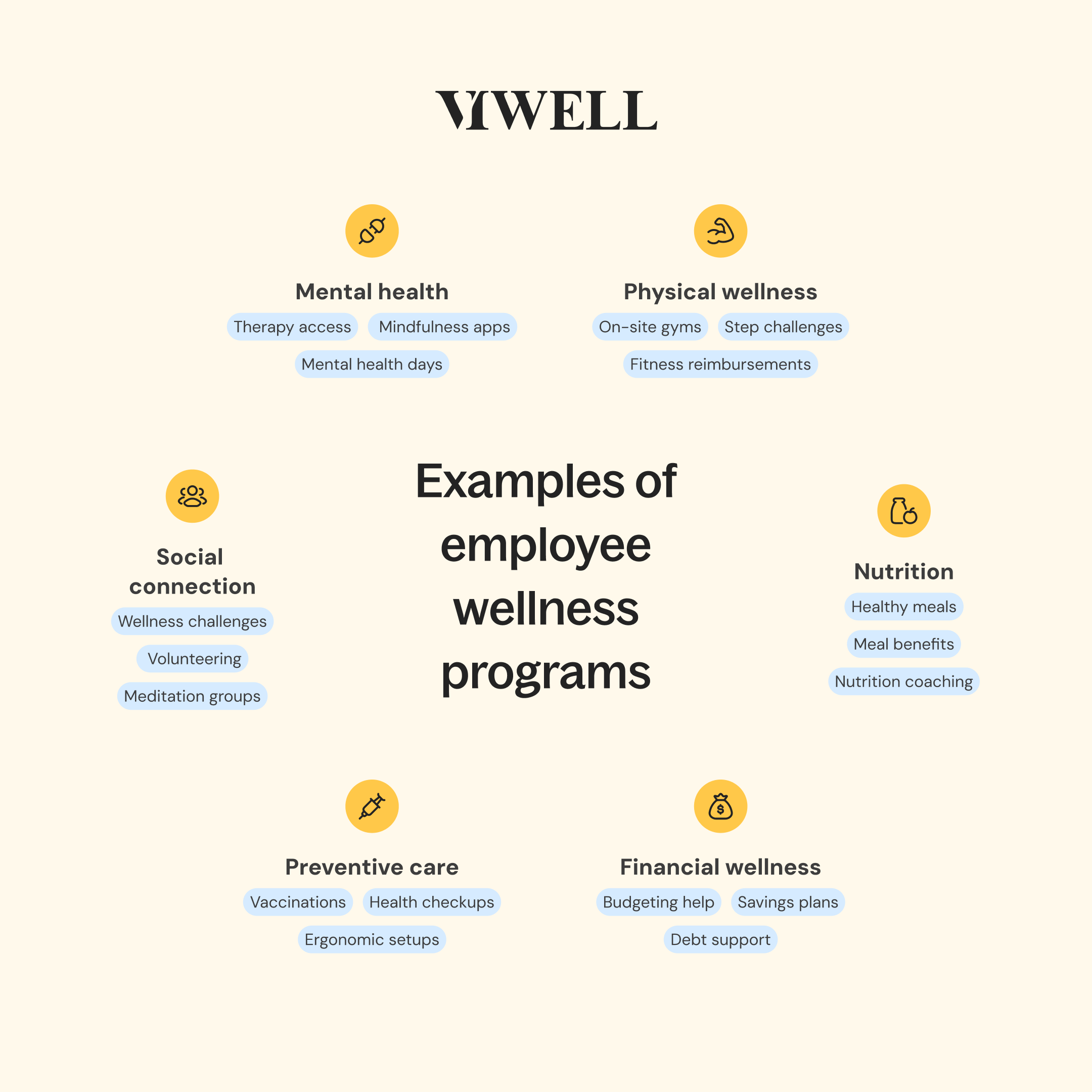
🧠 Mental health support
What it means: Managing stress, building resilience, and accessing emotional support.
Examples & Best Practices: Traditional offerings like Employee Assistance Programs (EAPs) and meditation app subscriptions often see low utilization. The shift is now toward embedded support tools—such as guided meditations, self-check-ins, therapy resources, and bite-sized resilience programs—that are accessible in the flow of work and seamlessly integrated into broader well-being strategies.
🏋️ Physical well-being
What it means: Supporting healthy lifestyle habits, fitness, nutrition, and sleep
Examples & Best Practices: Many companies offer gym memberships or wellness stipends, but struggle to track usage or long-term results. Leading organizations are now integrating personalized health assessments, digital fitness challenges, activity tracking, and on-demand wellness content into one experience. This makes physical wellness more accessible and easier to adopt as a part of everyday life.
🥦 Nutritional support
What it means: Supporting employees in making healthy food choices and maintaining a balanced diet.
Examples & Best Practices:
Offering healthy snacks and meals at the workplace.
Organizing nutrition workshops or access to dieticians.
Providing meal delivery services or kits with healthy options.
💸 Financial well-being
What it means: Helping employees manage money, reduce stress, and build financial confidence.
Examples & Best Practices: While financial literacy webinars and third-party budgeting tools are common, organizations seeing real results offer interactive financial coaching, planning tools, and progress-tracking features as part of their wellness program. The goal is to reduce financial anxiety and build long-term confidence through education and ongoing engagement.
🧘 Preventative care
Preventive health helps reduce long-term health risks related to poor nutrition.
Examples & Best Practices:
Health risk assessments to spot potential nutrition-related issues.
On-site health screenings for early detection of diet-related health problems.
Wellness challenges like “Healthy Eating Weeks” to promote better habits.
🙋♂️ Social connection
What it means: Fostering meaningful connections and a sense of belonging.
Examples & Best Practices: With hybrid and remote work on the rise, social connection has become harder to maintain. Some companies are using peer recognition systems, wellness challenges, group activities, and community-building events to nurture workplace relationships. Integrating these into wellness platforms ensures participation and fosters a stronger team culture.
Best practices for implementing a successful wellness program
To build a wellness program that actually works, follow these best practices:
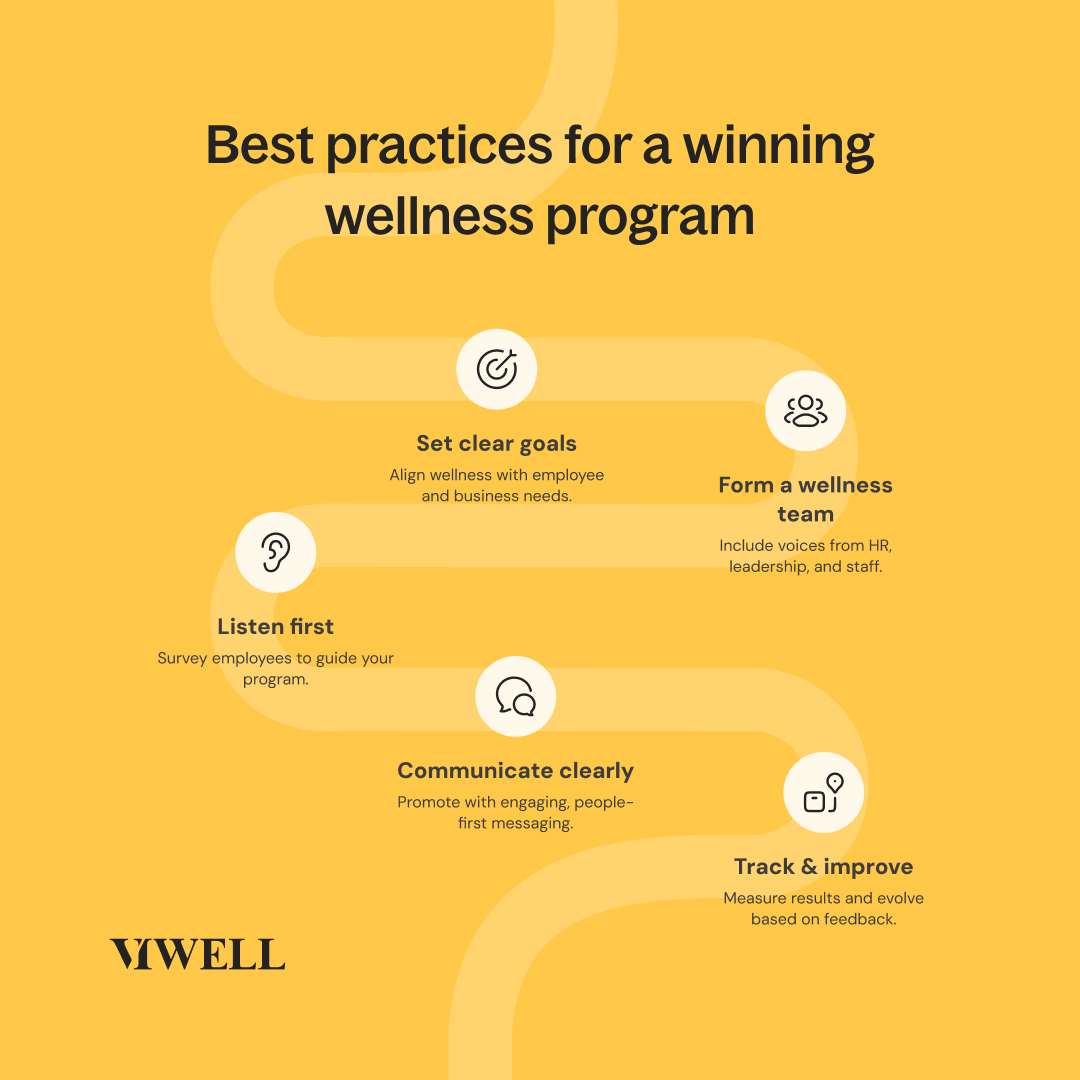
Define clear goals
Set objectives that benefit both employees and the business — from reducing stress levels to increasing productivity.
Build a cross-functional wellness team
Include HR, team leads, and employee representatives to ensure diverse input and accountability.
Listen first
Use surveys, focus groups, and direct feedback to understand what your team really needs.
Communicate with clarity
Announce programs through engaging, human-centered messaging that makes employees want to participate.
Track and evolve
Monitor participation and outcomes, and regularly update your offerings based on employee input and new trends.
How wellness programs connect with employee health insurance
While wellness programs and health insurance serve different functions, they can — and should — complement each other. For example:
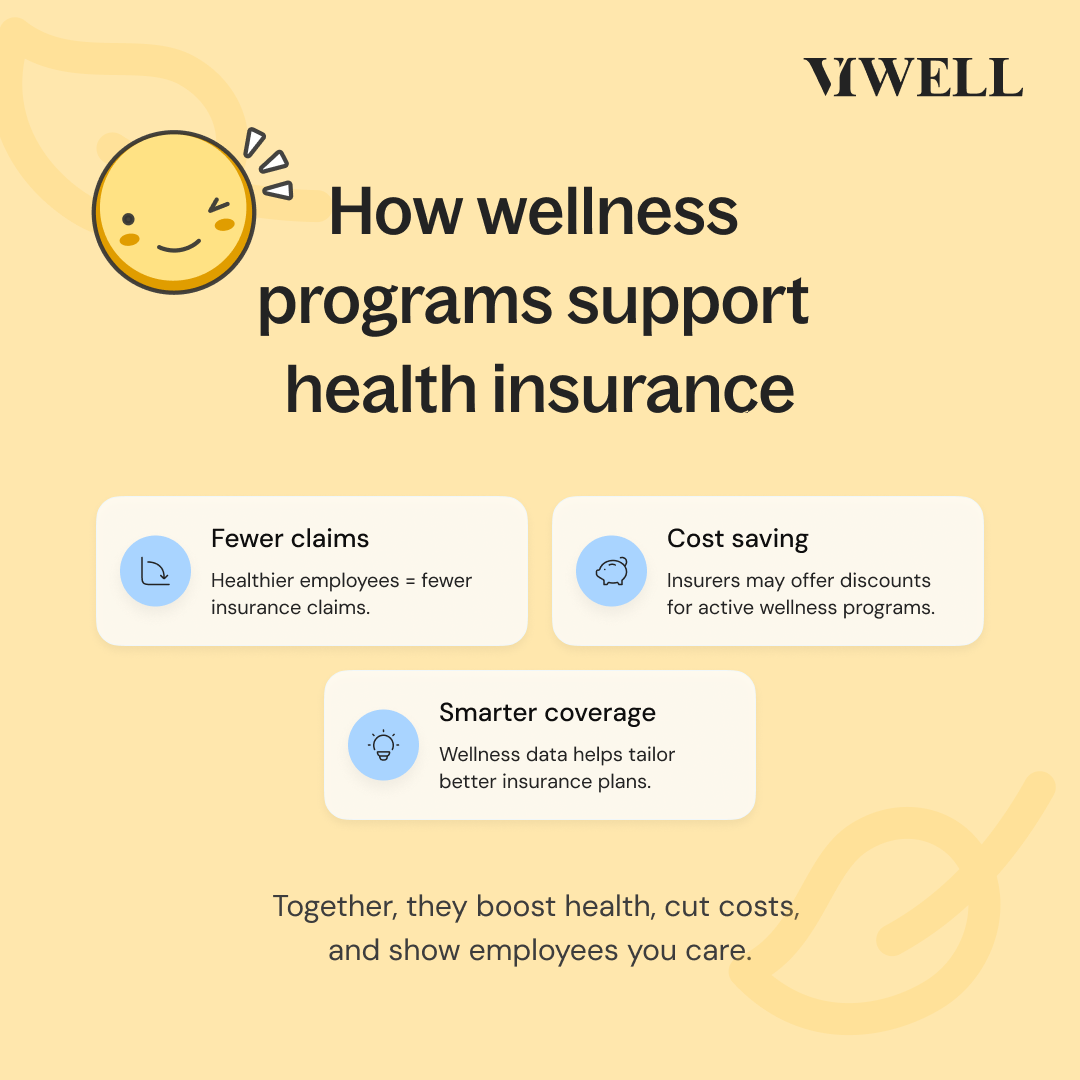
Wellness initiatives can reduce the number of claims filed by improving baseline health.
Health insurers may offer discounts or incentives to companies that run wellness programs.
Data from wellness platforms can help inform insurance strategy, leading to better plan choices and coverage.
By working hand in hand, wellness and insurance plans can help employees feel covered and cared for — both preventatively and reactively.
How VIWELL can support you : Why integration matters
Managing these six pillars through disconnected tools creates friction for employees and complexity for HR teams. A unified solution enables:
Seamless access to all wellness dimensions
Higher engagement through personalization
Real-time insights and measurable ROI
Streamlined program management
An integrated approach doesn’t just simplify execution—it improves participation, connects wellness to business goals, and allows for continuous optimization. Instead of managing isolated efforts, HR teams can focus on strategic impact while employees enjoy a cohesive, empowering experience. Organizations that embed wellness into everyday work life—supported by one connected system—are seeing stronger cultures, better performance, and sustained engagement.
Ready to simplify employee wellness and scale impact?
Explore how a unified platform can transform your workforce experience.
Frequently Asked Questions (FAQs)
-
Options range from fitness classes and mental health counseling to meal programs, financial literacy workshops, and ergonomic support.
-
Yes! Programs that reduce stress — like mindfulness, yoga, or flexible scheduling — help clear mental space for innovative thinking.
-
This could include budgeting assistance, one-on-one financial coaching, savings tools, or educational content on debt management.
-
They lead to lower health-related costs, improved employee satisfaction and retention, and a stronger organizational culture.
