Do You Really Need 10,000 Steps a Day?


For years, 10,000 steps a day has been considered the gold standard for good health.
Fitness trackers celebrate it; workplace wellness programs encourage it, and many of us end the day checking whether we've reached that magic number.
But what if you've only managed 6,000 steps? Or 4,000? Have you failed?
The answer is no.
In fact, modern research suggests that while walking more is always beneficial, you don't need to hit exactly 10,000 steps to improve your health. What matters most is moving consistently and building habits you can maintain for the long term.
That's why at VIWELL, we believe physical wellbeing isn't about perfection. It's about making movement part of your everyday life.
Quick Answer
Do you really need 10,000 steps a day?
No. Research shows that the health benefits of daily walking begin well before 10,000 steps. Many adults experience significant improvements between 4,000 and 8,000 daily steps, while consistency, regular physical activity, and an active lifestyle matter more than reaching one specific number every day.
Where Did the 10,000-Step Goal Come From?
Most people assume the 10,000-step target was developed by scientists.
Surprisingly, it wasn't.
The idea originated in 1964, when a Japanese company launched one of the world's first commercial pedometers ahead of the Tokyo Olympics. The device was called Manpo-kei, meaning "10,000-step meter."
The number was memorable, easy to market, and quickly captured people's attention. Over time, it became accepted around the world as a benchmark for a healthy lifestyle — even though it wasn't originally based on scientific evidence.
That doesn't mean 10,000 steps is a bad goal. It simply means researchers have since discovered that the story is much more nuanced.
What Does Science Actually Say?
Over the past decade, researchers have explored how daily step counts influence health, longevity, and disease risk.
The findings are encouraging.
- A landmark study published in JAMA Internal Medicine found that older adults who walked around 4,400 steps per day had significantly lower mortality rates than those walking fewer than 3,000 steps. Benefits continued to increase, leveling off around 7,500 steps.
- Research published in The Lancet Public Health reached a similar conclusion — there was no single number that worked for everyone. Age, lifestyle, and existing health conditions all influenced the ideal daily step count.
- According to the World Health Organization (WHO), nearly one in three adults worldwide does not meet recommended physical activity levels, increasing the risk of cardiovascular disease, type 2 diabetes, certain cancers, and poor mental health.
The message is clear:
every step counts.
If you're currently inactive, increasing your daily movement — even by a few thousand steps — can have a meaningful impact on your health.
Walking Is About More Than Burning Calories
Walking is one of the simplest and most effective ways to support your overall wellbeing.
Regular walking has been linked to:
- Improved heart health
- Better blood sugar regulation
- Reduced risk of type 2 diabetes
- Better sleep quality
- Improved mood and lower stress
- Healthier weight management
- Better brain health as we age
- Increased longevity
According to the World Health Organization (WHO), regular physical activity helps reduce the risk of cardiovascular disease, diabetes, several cancers, and premature death while supporting better mental wellbeing.
The best part?
Walking doesn't require expensive equipment, gym membership, or a major lifestyle change. It simply requires finding opportunities to move more throughout your day.
The Bigger Problem Isn't Missing 10,000 Steps
While many people worry about reaching a specific daily target, researchers are increasingly focusing on another issue:
we spend too much time sitting.
Whether you're working from a desk, attending virtual meetings, or commuting, long periods of inactivity can affect your health — even if you exercise regularly.
That's why health experts encourage people to:
- Stand up regularly during the day
- Take short walking breaks
- Walk during phone calls
- Choose the stairs when possible
- Add movement after meals
Small moments of movement throughout the day can improve circulation, support metabolism, increase energy levels, and make it easier to stay active consistently.
Why Physical Activity Matters in the Workplace
Today's workplaces are more sedentary than ever.
Whether employees are working from the office, remotely, or in hybrid environments, many spend hours sitting in front of screens with few opportunities to move throughout the day.
Regular movement doesn't only support physical health; it also contributes to better concentration, higher energy levels, improved productivity, and overall workplace wellbeing.
Across the UAE and wider GCC region, organizations are placing greater emphasis on employee wellbeing as part of their long-term business strategy. Encouraging simple habits such as walking meetings, stretch breaks, or short walks after lunch can help reduce sedentary behavior while supporting healthier, more engaged teams.
Why Short Walks Can Make a Big Difference
One of the easiest ways to build a healthier routine isn't by aiming for a huge daily number — it's by making movement part of your existing habits.
A 10-minute walk after a meal is a simple example. Research suggests that walking after eating can help:
- Support healthy blood sugar levels
- Aid digestion
- Reduce prolonged sitting
- Increase your daily step count naturally
- Make physical activity easier to maintain
Instead of setting aside an hour for exercise, you're simply adding a few minutes of movement to something you already do every day. That's the power of habit stacking — making healthy choices feel effortless rather than overwhelming.
Simple Ways to Move More Every Day
Building an active lifestyle doesn't require dramatic changes.
Small habits repeated consistently often make the biggest difference.
Try:
- Take a 10-minute walk after meals
- Stand up and stretch at least once every hour
- Choose the stairs instead of the lift whenever possible
- Walk while taking phone calls
- Hold walking meetings when appropriate
- Park a little farther away from your destination
- Get off public transport one stop earlier
- Use reminders to break up long periods of sitting
The goal isn't to be perfect.
It's simply to move more than you did yesterday.
Consistency Beats Perfection
So, should you still aim for 10,000 steps?
If it's realistic for your lifestyle, absolutely.
But don't let one number determine whether you've had a "good" or "bad" day.
Current research suggests:
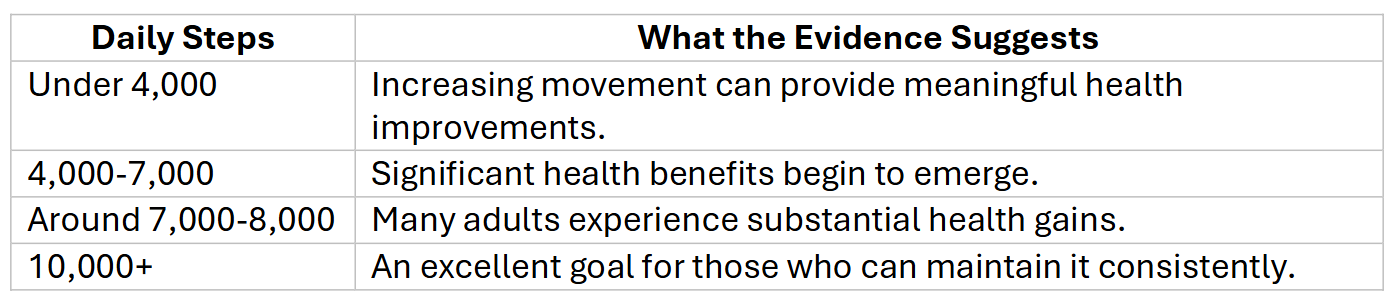
The healthiest routine isn't necessarily the one with the biggest goal.
It's the one you'll still be following six months from now.
Why VIWELL Chose a 10-Minute Walking Challenge
Throughout July, the VIWELL community challenged themselves to reach 150,000 steps, encouraging members to stay active and build momentum. This August, we're taking a different approach.
Our 10-Minute Walk After Meals Challenge isn't about chasing an arbitrary number. It's about helping you build a habit that's simple, realistic, and backed by science.
By taking a short walk after breakfast, lunch, or dinner, you can:
- Move more without disrupting your schedule
- Reduce long periods of sitting
- Support your metabolic health
- Build consistency one day at a time
Because sustainable wellbeing isn't created through one ambitious month — it's built through habits that become part of everyday life.
Every Step Counts
The real lesson behind the 10,000-step debate isn't that the number is wrong.
It's that movement matters more than perfection.
Whether you're taking your first walk of the week, working toward a personal step goal, or joining a 10-minute walking challenge, each step is an investment in your long-term health.
At VIWELL, we believe the best wellbeing habits are the ones you can maintain — not just for a month, but for life.
So instead of asking, "Did I reach 10,000 steps today?"
Try asking:
"What small step can I take today that I'll still be taking next month?"
That simple shift in mindset may be the most powerful step of all.
References
- World Health Organization (WHO). Physical Activity Fact Sheet.
- Lee IM, et al. Association of Step Volume and Intensity With All-Cause Mortality in Older Women. JAMA Internal Medicine.
- Paluch AE, et al. Daily Steps and All-Cause Mortality. The Lancet Public Health.
Harvard Medical School. Walking for Health resources and expert commentary